
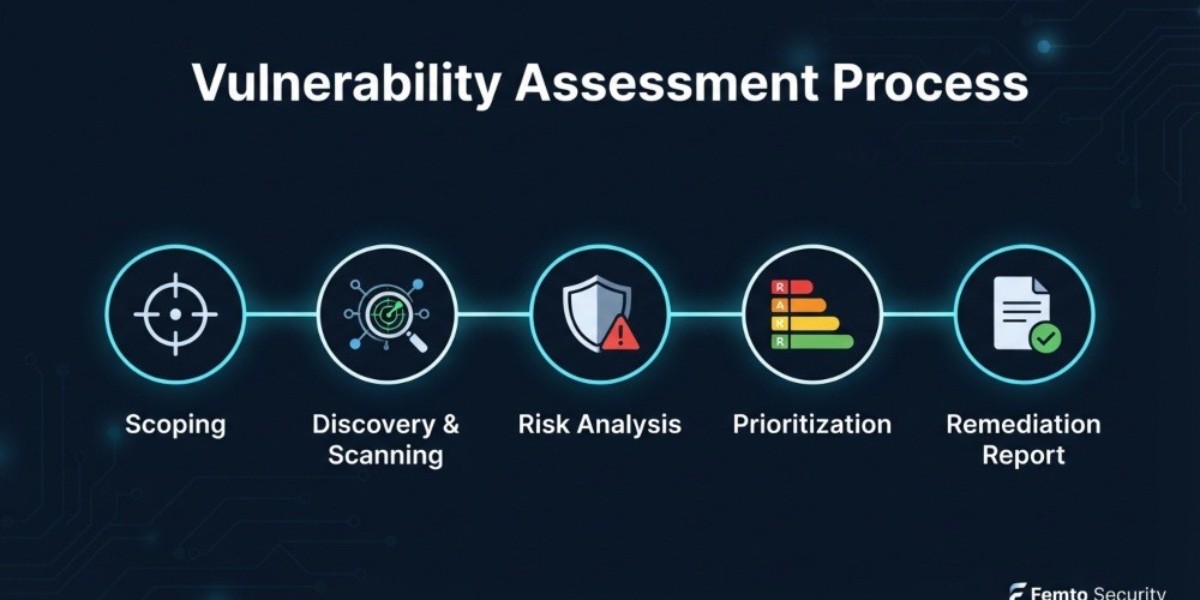

A vulnerability assessment is one of the most effective ways to identify security weaknesses, understand potential risks, and strengthen an organization's cybersecurity defenses.
Vulnerability Assessment: Identify Security Weaknesses Before Cybercriminals Exploit Them
In today's rapidly evolving digital landscape, cybersecurity is no longer optional. Organizations rely on applications, cloud infrastructure, networks, and digital platforms to operate efficiently. However, every connected system introduces potential security risks that cybercriminals may exploit.
A vulnerability assessment is one of the most effective ways to identify security weaknesses, understand potential risks, and strengthen an organization's cybersecurity defenses.
What Is a Vulnerability Assessment?
A vulnerability assessment is a systematic process of identifying, analyzing, and prioritizing security weaknesses across an organization's IT infrastructure, applications, networks, and endpoints.
The objective is simple: discover vulnerabilities before attackers do and help security teams take proactive measures to reduce cyber risks.
Common vulnerabilities include:
Unpatched software and outdated systems
Misconfigured servers and cloud environments
Weak passwords and authentication mechanisms
Exposed network services
Insecure APIs and applications
Outdated security protocols
Identifying these weaknesses early can significantly reduce the likelihood of security incidents.
Why Vulnerability Assessments Matter
Cyber threats continue to evolve, making proactive security essential for businesses of every size. Without regular assessments, organizations may remain unaware of vulnerabilities that expose sensitive information or critical infrastructure.
Vulnerability assessments help organizations:
1. Identify Security Gaps
Discover weaknesses across your digital environment and gain better visibility into your security posture.
2. Prioritize Critical Risks
Not every vulnerability presents the same level of risk. CVSS scoring and business impact analysis help security teams focus on the most critical issues first.
3. Improve Remediation Efforts
Actionable findings allow IT and security teams to address vulnerabilities efficiently and monitor remediation progress.
4. Strengthen Compliance Readiness
Regular vulnerability assessments support security governance and help organizations prepare for applicable cybersecurity and regulatory requirements.
5. Reduce Attack Surface Exposure
Identifying exposed assets, outdated systems, and misconfigurations helps organizations minimize opportunities for cyber attackers.
Vulnerability Assessment vs. Penetration Testing
Although vulnerability assessments and penetration testing are closely related, they serve different purposes.
A vulnerability assessment identifies and prioritizes security weaknesses across systems and infrastructure.
Penetration testing goes further by safely attempting to exploit identified vulnerabilities to understand their real-world impact.
Both approaches complement each other and contribute to a stronger cybersecurity strategy.
How FemtoSec Helps Organizations Strengthen Cybersecurity
FemtoSec provides vulnerability assessment services designed to help organizations identify, prioritize, and track security weaknesses across their infrastructure.
Its vulnerability management capabilities include:
Intelligent Discovery: Identify vulnerabilities across your digital attack surface.
Smart Filtering: Organize findings by severity, status, asset, and CVE.
Real-Time Alerts: Receive notifications when critical vulnerabilities are discovered.
CVSS Scoring: Prioritize vulnerabilities using industry-standard severity scoring.
Trend Analysis: Monitor vulnerability trends and measure security improvements.
Remediation Tracking: Track vulnerabilities through remediation workflows from Open to Resolved.
These capabilities help security teams move beyond vulnerability detection and establish a more structured approach to risk management.
How Often Should You Conduct Vulnerability Assessments?
Organizations should conduct vulnerability assessments regularly to maintain visibility into their security posture.
Quarterly assessments are a useful baseline for many organizations, while additional assessments should be considered after:
Deploying new applications or infrastructure
Making significant configuration changes
Expanding cloud environments
Introducing new internet-facing assets
Experiencing a security incident
Continuous vulnerability monitoring can further improve visibility between scheduled assessments.
Build a Proactive Cybersecurity Strategy with FemtoSec
Cybersecurity starts with understanding where your weaknesses exist.
By identifying vulnerabilities, prioritizing critical risks, and tracking remediation, organizations can reduce exposure and improve their overall security posture.
With FemtoSec Vulnerability Assessment Services, security teams gain the visibility and insights needed to address vulnerabilities before they become serious security incidents.
Don't wait for attackers to discover your vulnerabilities. Take control of your security today.
Explore FemtoSec Vulnerability Assessment Services:
Protect your infrastructure. Prioritize your risks. Strengthen your security with FemtoSec.