
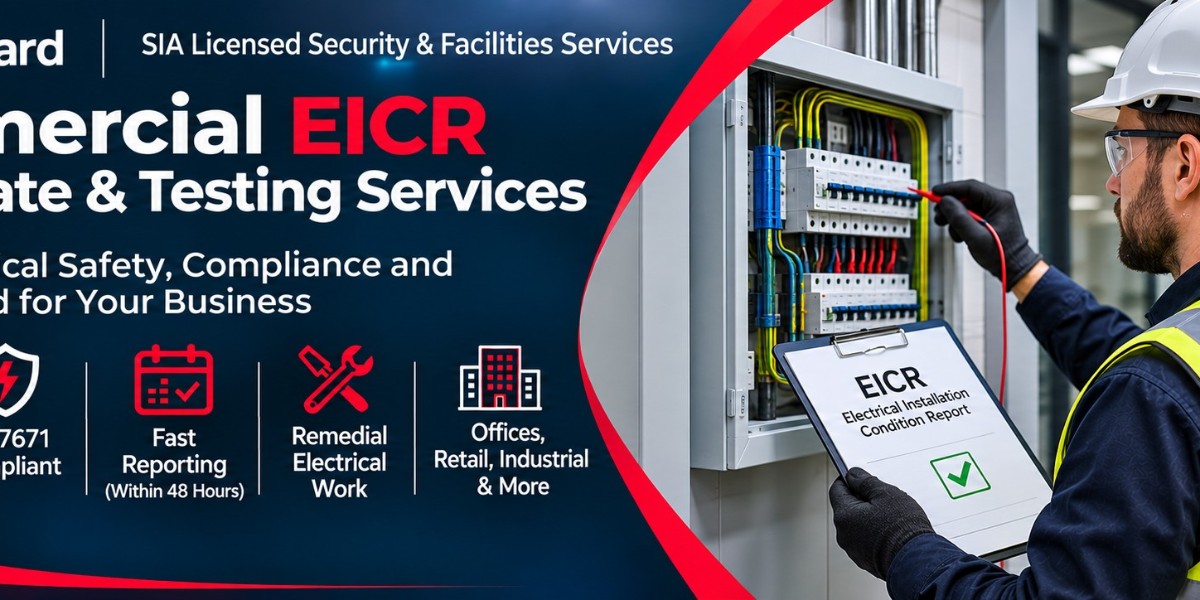

Get professional commercial EICR testing across the UK with qualified electricians, BS 7671 inspections, fast reporting and remedial electrical services.
Electrical safety is essential for businesses, landlords and commercial property managers across the UK. Faulty wiring, damaged electrical components and poorly maintained installations can create serious risks, including electric shocks, fires and operational disruption.
A Commercial Electrical Installation Condition Report (EICR) helps identify electrical faults, assess the safety of fixed wiring and determine whether remedial work is required.
Regular electrical inspections help businesses understand the condition of their installations and meet their responsibilities for maintaining safe workplaces.
Intraguard provides Commercial EICR Certificate and Testing Services across the UK through qualified electricians, with inspections carried out in line with BS 7671 wiring regulations and reports usually issued within 48 hours of inspection.
What Is a Commercial EICR Certificate?
A Commercial EICR Certificate, formally known as an Electrical Installation Condition Report, records the findings of an inspection and testing assessment of a property's fixed electrical installation.
The inspection evaluates whether electrical systems remain safe for continued use and identifies defects that may require corrective action.
It typically covers electrical wiring, distribution boards, sockets, circuits, protective devices and other fixed installation components.
An EICR is different from an Electrical Installation Certificate, which is generally issued for new electrical installation work or certain alterations.
The report provides property owners and managers with a clearer understanding of electrical safety conditions.
Why Commercial EICR Testing Is Important
Commercial properties rely on electrical installations to support lighting, computers, machinery, security equipment and everyday business operations.
Electrical systems can deteriorate over time due to wear, environmental conditions and changes in usage.
Identifying Electrical Safety Risks
Professional inspection and testing can identify damaged wiring, defective protective devices, poor connections and other electrical hazards.
Detecting these issues helps businesses arrange repairs before faults develop into more serious problems.
Reducing Fire and Electric Shock Risks
Faulty electrical installations can create fire hazards and expose employees or visitors to electric shock.
An EICR assesses relevant aspects of installation safety and records conditions that require attention.
Supporting Business Continuity
Electrical failures may interrupt operations, damage equipment and create unexpected maintenance expenses.
Regular inspections help facilities managers identify developing problems and plan appropriate corrective work.
Is a Commercial EICR Certificate a Legal Requirement?
UK businesses have legal responsibilities to maintain electrical installations safely.
The Electricity at Work Regulations 1989 require electrical systems to be maintained so that danger is prevented, so far as reasonably practicable.
However, these regulations do not impose one universal EICR inspection interval for every commercial property.
An EICR is a widely recognised way of assessing the condition of fixed electrical installations and demonstrating responsible maintenance.
Understanding BS 7671
BS 7671, commonly called the IET Wiring Regulations, provides recognised requirements for electrical installations.
Commercial EICR inspections are generally carried out in accordance with the relevant inspection and testing principles of BS 7671.
Although BS 7671 is not itself legislation, following applicable standards can help businesses meet electrical safety duties.
Commercial Landlord Responsibilities
Commercial landlords should establish who is responsible for electrical maintenance under the lease and applicable legal arrangements.
Landlords and tenants may have different responsibilities depending on their agreements and control of the premises.
A current EICR can provide useful evidence of electrical installation condition during lease reviews and property handovers.
What Does Commercial EICR Testing Include?
A commercial electrical inspection involves examining and testing relevant parts of the fixed electrical installation.
Electrical Wiring Inspection
Electricians assess wiring condition and look for visible deterioration, damage and potentially unsafe installation practices.
The inspection helps identify defects that could increase electrical risks.
Distribution Boards and Protective Devices
Distribution boards and circuit protection equipment are examined to assess their condition and suitability.
Inspectors may identify damaged components, unsuitable protective arrangements or other concerns requiring further investigation.
Socket Outlets and Electrical Circuits
Fixed socket outlets and electrical circuits are assessed through appropriate visual checks and testing.
The purpose is to identify defects that could affect electrical safety.
Earthing and Bonding
Earthing and protective bonding arrangements are important for reducing electric shock risks.
Qualified electricians assess relevant protective measures according to the installation and applicable testing requirements.
How Does the Commercial EICR Inspection Process Work?
A structured inspection process helps businesses understand what will happen before, during and after testing.
Initial Property Assessment
The electrician establishes the property type, electrical installation size, access arrangements and inspection requirements.
For larger commercial buildings, testing may need to be arranged outside normal working hours.
Electrical Inspection and Testing
Qualified electricians perform appropriate visual inspections and electrical tests.
Some testing may require temporary isolation of electrical circuits.
Businesses should coordinate access and planned interruptions to minimise operational disruption.
Issuing the EICR Report
After completing the inspection, the electrician prepares a report detailing the condition of the installation.
The report includes relevant observations, test results and the overall assessment.
Intraguard states that reports are usually issued within 48 hours after inspection, subject to the inspection circumstances.
Understanding EICR Observation Codes
Electrical Installation Condition Reports use recognised classification codes to identify the seriousness of observed defects.
C1: Danger Present
A C1 observation indicates an immediate danger that requires urgent action.
The inspector should take appropriate steps to make the situation safe and notify the responsible person.
C2: Potentially Dangerous
A C2 observation identifies a condition that could become dangerous and requires urgent remedial action.
C3: Improvement Recommended
A C3 observation identifies an area where improvement is recommended.
A C3 observation alone does not normally make an EICR unsatisfactory.
FI: Further Investigation Required
FI indicates that additional investigation is necessary without delay to determine whether danger or potential danger exists.
An EICR containing C1, C2 or FI observations is normally classified as unsatisfactory.
What Happens if a Commercial EICR Is Unsatisfactory?
An unsatisfactory EICR means the electrical installation has identified defects or concerns that require further attention.
Arranging Remedial Electrical Work
A competent electrician should assess the observations and complete appropriate corrective work.
The urgency depends on the classification and nature of the identified problem.
Reinspection and Testing
After repairs, relevant inspection and testing should confirm that the identified defects have been addressed.
Appropriate certification or written confirmation should be retained with the original EICR.
Intraguard provides remedial electrical work and follow-up testing through its in-house electrical team.
How Often Should Commercial EICR Testing Be Carried Out?
Many commercial premises are inspected approximately every five years, but this is guidance rather than a universal legal deadline.
The correct inspection interval depends on the installation's condition, usage, environment, maintenance history and recommendations from a competent professional.
Office Buildings and Retail Premises
Offices and shops commonly use a five-year recommended inspection interval where conditions support it.
However, installations exposed to greater wear or other risks may require more frequent attention.
Warehouses and Industrial Facilities
Industrial environments may require shorter intervals because of machinery, environmental conditions or operational demands.
Some industrial installations have a recommended initial interval of approximately three years.
When Earlier Testing May Be Necessary
Additional inspections may be appropriate following significant electrical alterations, damage, flooding or concerns about installation safety.
A competent electrician should determine whether further testing is needed.
Commercial EICR Certificate Costs in the UK
Commercial EICR testing costs depend on property size, the number of electrical circuits, installation complexity and site accessibility.
A small retail unit usually requires a different inspection scope from a large office building or industrial facility.
Factors Affecting EICR Pricing
Properties with several distribution boards, numerous circuits and complex electrical installations require more inspection time.
Testing outside normal working hours may also influence the quotation.
Large Commercial and Industrial Properties
Larger properties generally require a site-specific quotation.
Intraguard provides quotation-based pricing for commercial and industrial EICR inspections.
Businesses should confirm whether the quoted price includes reporting, any necessary return visits and additional testing.
Commercial EICR Testing for Different Property Types
Electrical inspection requirements vary across commercial and industrial environments.
Office Buildings
Offices depend on electrical systems for computers, lighting, communication equipment and building operations.
Regular inspections help facilities teams understand installation condition and plan maintenance.
Retail Shops and Shopping Centres
Retail premises rely on electrical installations for lighting, payment equipment and other business systems.
EICR testing helps identify defects and supports responsible property management.
Warehouses and Industrial Buildings
Warehouses and industrial premises may contain complex electrical distribution arrangements and equipment operating for extended periods.
Inspection planning should consider operational safety and the need to minimise interruptions.
Managed Commercial Properties
Managing agents responsible for multiple buildings may need coordinated inspection schedules and consistent electrical safety records.
Professional EICR services can support this process.
Commercial EICR vs PAT Testing
Commercial EICR testing and Portable Appliance Testing address different electrical safety concerns.
An EICR assesses fixed electrical installations, including wiring, distribution boards and connected circuits.
PAT testing, commonly used to describe in-service inspection and testing of electrical equipment, focuses on appliances and other electrical equipment where appropriate.
For example, a fixed wall socket may be assessed during an EICR, while a portable office appliance may require a separate equipment safety assessment.
Businesses should consider both installation safety and equipment maintenance.
How Long Does a Commercial EICR Inspection Take?
The inspection duration depends on the number of electrical circuits, property size and installation complexity.
A small commercial unit may require several hours, while larger buildings may need extended testing periods.
Some inspections may be completed across multiple visits to reduce disruption.
Businesses should provide accurate property information before booking so the electrician can estimate the required inspection time.
Why Choose Intraguard for Commercial EICR Testing?
Intraguard provides commercial, residential and industrial EICR inspection services across the United Kingdom.
The company uses in-house qualified electricians and states that its electrical team includes NICEIC Qualified Supervisor competence.
Professional Electrical Inspections
Inspections are carried out in line with BS 7671 and the relevant IET Wiring Regulations.
This supports a structured approach to electrical inspection and reporting.
Fast EICR Reporting
Intraguard usually provides EICR reports within 48 hours after inspection.
Same-day appointments may be available, although the company recommends providing at least 24 hours' notice where possible.
Remedial Work and Retesting
Where electrical defects are identified, Intraguard can arrange remedial work and follow-up testing through its in-house team.
This helps property managers coordinate inspection findings and necessary corrective action.
Nationwide Property Coverage
Intraguard supports commercial landlords, facilities managers, managing agents and businesses with properties across the UK.
Its services include offices, retail units, warehouses, industrial sites and managed buildings.
Conclusion
Commercial EICR certificates are an important part of maintaining electrical safety in UK business premises.
Professional inspections identify potential hazards, assess fixed electrical installations and provide documented findings for property owners and managers.
Understanding inspection intervals, observation codes and remedial requirements helps businesses manage electrical risks responsibly.
With qualified electricians, UK-wide coverage, prompt reporting and remedial support, Intraguard helps organisations maintain safer commercial electrical installations.
Frequently Asked Questions (FAQs)
What is a Commercial EICR Certificate?
A Commercial Electrical Installation Condition Report records the findings of an inspection and testing assessment of a commercial property's fixed electrical installation.
Is a Commercial EICR legally required in the UK?
Businesses must maintain electrical installations safely under relevant legislation. However, there is no universal statutory requirement for every commercial property to obtain an EICR at a fixed five-year interval.
How often should a commercial property have an EICR?
Five years is a common recommended interval for many offices and shops. Industrial properties or higher-risk installations may require more frequent inspections based on professional assessment.
How much does a Commercial EICR cost?
Costs depend on building size, electrical circuit count, installation complexity and access requirements. Large commercial premises usually require a tailored quotation.
What happens if a commercial property fails an EICR?
An unsatisfactory report identifies electrical concerns requiring attention. A competent electrician should complete suitable remedial work and provide appropriate evidence that defects have been addressed.
What does C2 mean on an EICR?
C2 means potentially dangerous. It identifies a condition requiring urgent remedial action.
How quickly can Intraguard issue an EICR report?
Intraguard states that EICR reports are usually issued within 48 hours after inspection, depending on the assessment and reporting requirements.
What is the difference between EICR and PAT testing?
An EICR assesses fixed electrical installations, while PAT testing is associated with the inspection and testing of electrical appliances and equipment.
Can Intraguard arrange remedial electrical repairs?
Yes. Intraguard offers remedial electrical work and follow-up testing through its in-house electrical team when defects are identified.
Does Intraguard provide Commercial EICR testing across the UK?
Yes. Intraguard provides EICR inspection and testing for commercial, industrial and residential properties throughout the United Kingdom.