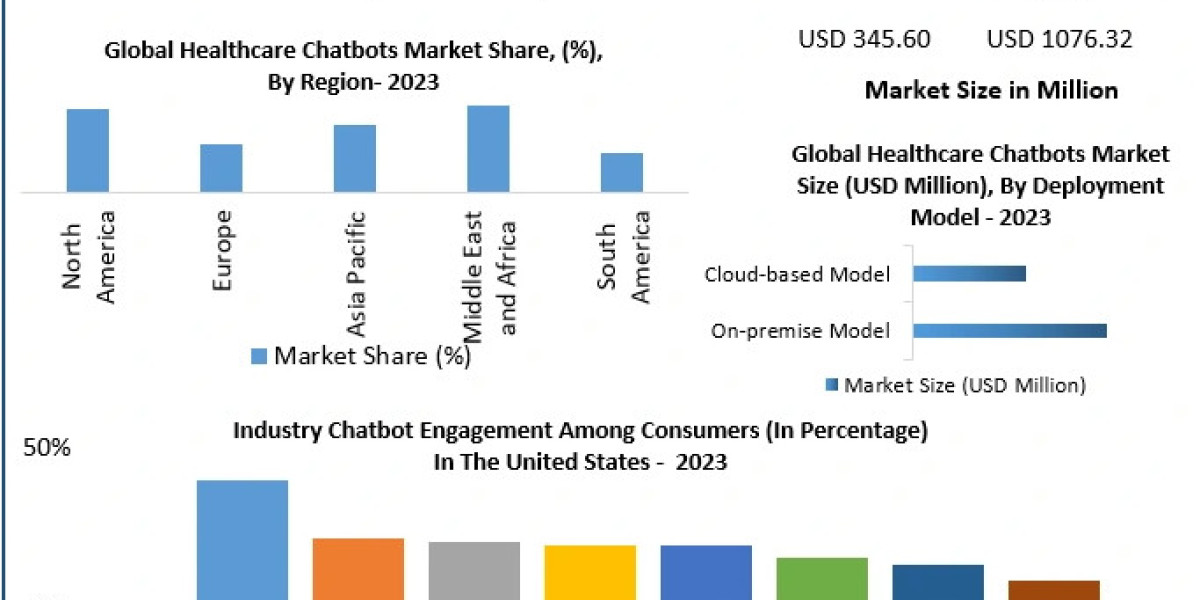

The Healthcare Chatbots Market size was valued at USD 345.60 Million in 2023 and the total Healthcare Chatbots revenue is expected to grow at a CAGR of 17.62% from 2024 to 2030, reaching nearly USD 1076.32 Million by 2030.
Global Healthcare Chatbot Market – Transforming Patient Care and Operational Efficiency
The global Healthcare chatbot market is experiencing significant growth, driven by advancements in artificial intelligence (AI), increased demand for remote healthcare services, and the need for operational efficiency. Valued at approximately USD 345.60 million in 2023, the market is projected to reach nearly USD 1.08 billion by 2030, growing at a compound annual growth rate (CAGR) of 17.62% during the forecast period.
Market Estimation & Definition
Healthcare chatbots are AI-powered tools designed to simulate human-like conversations, assisting users with tasks such as appointment scheduling, symptom assessment, medication reminders, and providing medical information. These chatbots are accessible across various platforms, including websites, messaging applications, and voice assistants. The market encompasses software and services, with deployment models like on-premise and cloud-based systems being commonly utilized.
Curious about the market dynamics? Get a free sample to explore the latest insights here:https://www.maximizemarketresearch.com/request-sample/240/
Market Growth Drivers & Opportunities
Several factors contribute to the rapid expansion of the healthcare chatbot market:
Increased Internet Accessibility and Smartphone Penetration: The widespread availability of the internet and the growing adoption of smartphones have made healthcare services more accessible, facilitating the use of chatbots for patient engagement.
Advancements in AI and Natural Language Processing (NLP): Improvements in AI and NLP have enhanced the capabilities of chatbots, enabling them to understand and respond to complex medical queries more accurately.
Rising Demand for Remote Healthcare Services: The shift towards telemedicine and remote patient monitoring has accelerated the adoption of chatbots, providing patients with timely medical advice and reducing the burden on healthcare professionals.
Cost-Effectiveness: Chatbots help healthcare organizations reduce operational costs by automating routine tasks, allowing staff to focus on more critical aspects of patient care.
Opportunities lie in integrating chatbots with electronic health records (EHRs) and wearable devices, enabling personalized care and real-time health monitoring.
What Lies Ahead: Emerging Trends Shaping the Future
The healthcare chatbot market is witnessing several emerging trends:
Integration with EHRs and Wearable Devices: Combining chatbot technology with EHRs and wearable devices allows for seamless access to patient data, enhancing care coordination and patient engagement.
Focus on Mental Health Support: AI-powered chatbots are being developed to provide mental health support, offering services like cognitive behavioral therapy and emotional assistance.
Omnichannel Deployment: Healthcare providers are adopting omnichannel strategies, deploying chatbots across multiple platforms to reach a broader patient base and improve accessibility.
Regulatory Compliance and Data Security: Ensuring compliance with healthcare regulations and safeguarding patient data remain priorities, with advancements in encryption and security protocols addressing these concerns.
Segmentation Analysis
The healthcare chatbot market is segmented based on component, deployment model, application, and end-user:
Component: Software and Services
Deployment Model: Cloud-based and On-premise
Application: Symptom Checking, Appointment Scheduling, Medication Reminders, and Health Information Assistance
End-User: Healthcare Providers, Patients, and Healthcare Payers
To Gain More Insights into the Market Analysis, Browse Summary of the Research Report:https://www.maximizemarketresearch.com/market-report/global-healthcare-chatbots-market/240/
Country-Level Analysis: USA and Germany
United States: The U.S. leads the global healthcare chatbot market, driven by advanced healthcare infrastructure, high smartphone penetration, and early adoption of AI technologies. The market is expected to continue its growth trajectory, supported by significant investments in digital health solutions and a growing demand for virtual healthcare services.
Germany: Germany demonstrates a strong CAGR projection for healthcare chatbots, benefiting from a well-established healthcare infrastructure and a proactive approach to integrating digital solutions. The country's focus on improving healthcare services and reducing costs contributes to the anticipated growth in the utilization of healthcare chatbots.
Competitive Landscape
The healthcare chatbot market is characterized by the presence of several key players striving to enhance their market position through innovation and strategic partnerships. Notable companies include:
Your.MD: Known for providing personalized health information and guidance.
HealthTap Inc.: Offers virtual healthcare services and AI-powered medical consultations.
Sensely Inc.: Specializes in virtual assistants for healthcare providers.
Buoy Health Inc.: Provides AI-driven symptom checking and health navigation services.
Infermedica: Focuses on AI-powered medical diagnostics and triage solutions.
Press Release Conclusion
The healthcare chatbot market is poised for substantial growth, driven by technological advancements, increasing demand for remote healthcare services, and the need for operational efficiency. As healthcare organizations continue to adopt AI-powered solutions, chatbots are set to play a pivotal role in enhancing patient care, improving accessibility, and reducing costs. Stakeholders are encouraged to invest in innovative chatbot technologies to stay ahead in the evolving healthcare landscape.