
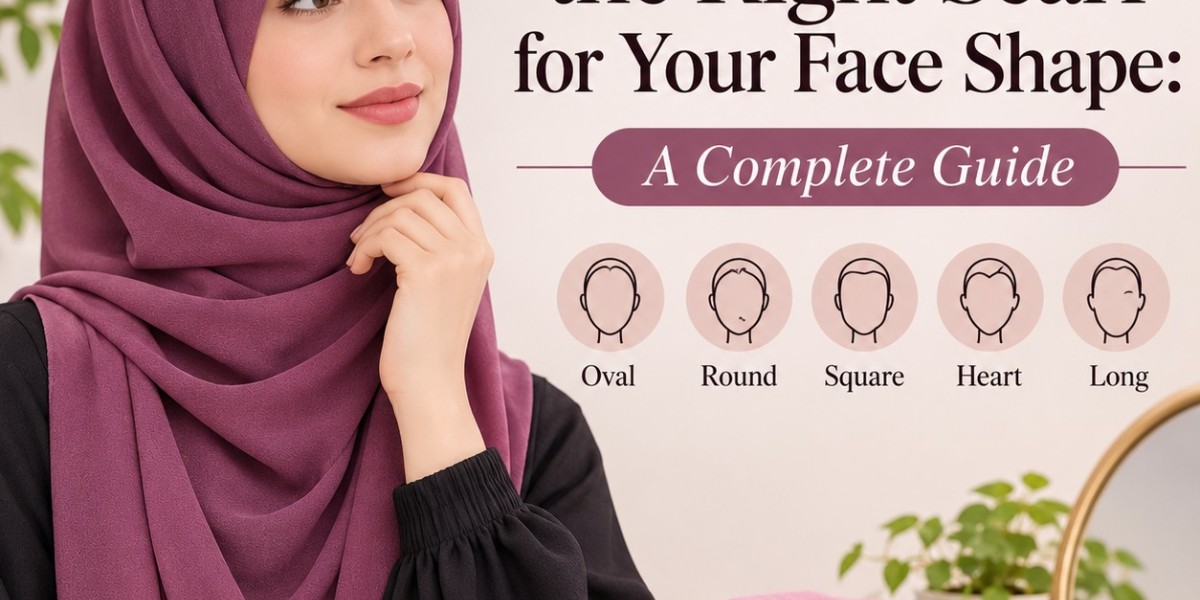

Find the best scarf styles for your face shape with hijab styling tips, fabric suggestions and elegant draping ideas for a balanced, stylish look.
How to Choose the Right Scarf for Your Face Shape: A Complete Guide
Choosing the right scarf is about more than selecting a beautiful colour or fashionable print. The way a scarf frames your face, the fabric you choose and how you arrange its folds can influence the overall appearance of your outfit.
Some scarf styles create a softer frame, while others add structure or bring more attention to particular features. Understanding your face shape can help you experiment with different draping techniques and find styles that complement your natural features.
Whether you prefer lightweight chiffon, comfortable jersey or elegant modal scarves, there are plenty of ways to make your scarf styling feel more personal.
In this guide, we will explore how to choose the right scarf for your face shape, which fabrics to consider and how to create balanced looks for everyday wear and special occasions.
1. How to Identify Your Face Shape
Before choosing a scarf style, it helps to understand your face shape. You do not need professional measurements or special equipment. A mirror and a few minutes are enough to get a general idea.
Follow these simple steps:
Pull your hair away from your face so your forehead and jawline are visible.
Stand in front of a mirror and look straight ahead.
Compare the width of your forehead, cheekbones and jawline.
Notice whether your face appears longer than it is wide.
Look at the overall outline rather than focusing on one feature.
Most face shapes fall into five common categories: oval, round, square, heart-shaped and long.
Remember that face shapes are not strict categories. You may have features that fall between two shapes, and that is completely normal.
2. Best Scarf Styles for an Oval Face Shape
An oval face generally has balanced proportions, with a length slightly greater than its width. The forehead is often a little wider than the chin, and the jawline has a softer outline.
One advantage of an oval face shape is that it offers plenty of styling flexibility. You can experiment with different scarf arrangements without needing to create significant changes in the overall frame.
Scarf styles to try:
Classic Wrap: A simple, neat wrap creates a clean appearance and works well for everyday outfits.
Loose Draped Style: Let the fabric fall naturally around the shoulders for a relaxed and elegant look.
Layered Scarf Style: Add soft layers to introduce texture and dimension.
Side-Fall Style: Allow one end of the scarf to fall over the shoulder for an effortless finish.
Recommended fabrics: Jersey, chiffon, modal and lightweight cotton.
For everyday wear, try neutral shades such as beige, taupe and soft grey. For occasions, printed or satin-finish scarves can add a more refined touch.
3. Best Scarf Styles for a Round Face Shape
A round face generally has similar length and width, with fuller cheeks and a softly curved jawline.
If you want to create a slightly longer-looking appearance, consider scarf styles that introduce vertical lines and gentle height around the crown.
Scarf styles to try:
Slightly Elevated Wrap: Create a little height at the top rather than keeping the fabric completely flat.
Vertical Draping: Allow the scarf ends to fall vertically along the shoulders to create a lengthening effect.
Loose Side Framing: Keep the fabric around the cheeks comfortable instead of wrapping it too tightly.
V-Shaped Front: A gentle V-shaped opening can introduce a more elongated appearance.
Recommended fabrics: Chiffon, modal and lightweight georgette.
Avoid excessive fabric bulk around the cheeks if you prefer a more defined frame. A simple, flowing scarf with minimal folds can work particularly well.
For casual outfits, try a neutral jersey or modal scarf. For formal occasions, lightweight chiffon offers a graceful drape.
4. Best Scarf Styles for a Square Face Shape
A square face usually has a more defined jawline, with the forehead, cheekbones and jaw appearing relatively similar in width.
Soft folds and flowing fabrics can create a gentle contrast with more angular facial features.
Scarf styles to try:
Soft Draped Wrap: Allow the scarf to fall naturally around the sides of your face.
Rounded Face Framing: Use gentle curves instead of creating sharp, tight folds.
Side-Swept Style: Position the fabric slightly to one side for an asymmetrical appearance.
Loose Layered Style: Add soft layers around the shoulders without creating unnecessary bulk.
Recommended fabrics: Chiffon, soft modal and lightweight georgette.
Avoid pulling the scarf tightly around the jaw if you prefer a softer appearance. Instead, experiment with relaxed folds that follow the natural shape of your face.
A plain chiffon scarf paired with a simple outfit is an excellent option for creating an elegant everyday look.
5. Best Scarf Styles for a Heart-Shaped Face
A heart-shaped face generally features a wider forehead and cheek area with a narrower chin.
The idea behind scarf styling for this face shape is to create a balanced appearance by introducing some softness around the lower part of the face.
Scarf styles to try:
Loose Chin Draping: Keep the scarf slightly relaxed beneath the chin.
Layered Neck Style: Use soft layers around the neck and shoulders.
Side-Fall Draping: Let one side fall naturally to create movement.
Soft Pleated Style: Introduce gentle folds rather than tightly structured wrapping.
Recommended fabrics: Chiffon, jersey and modal.
Avoid adding too much height or bulk around the forehead if you want a more balanced frame. A relaxed scarf style with some fullness around the lower face can be a good starting point.
Soft colours such as dusty rose, cream and muted lavender can also complement a feminine, understated outfit.
6. Best Scarf Styles for a Long Face Shape
A long or oblong face is noticeably longer than it is wide. The forehead, cheekbones and jaw may have similar widths, while the overall facial outline appears elongated.
If you want to create a more balanced appearance, try scarf styles that introduce some width around the sides rather than adding extra height at the top.
Scarf styles to try:
Side-Volume Style: Arrange soft folds around the sides of your face.
Low-Front Wrap: Keep the front edge slightly lower rather than creating a high crown.
Layered Draping: Add gentle layers around the shoulders and sides.
Soft Cheek Framing: Allow the scarf to sit naturally around the cheeks.
Recommended fabrics: Jersey, modal and soft cotton blends.
Avoid excessive height at the crown if you want to reduce the appearance of facial length. Instead, focus on balanced folds and comfortable side framing.
A softly draped scarf with moderate volume can work well for both casual and formal outfits.
7. How Scarf Fabric Affects Your Overall Look
Your face shape is only one part of choosing the right scarf. Fabric also plays an important role because different materials create different levels of structure, movement and volume.
Here are some popular scarf fabrics and how they can influence your styling:
Chiffon
Chiffon is lightweight and offers a flowing appearance. It is useful for creating soft folds, layered looks and elegant draping. It may require pins or magnets to stay in place.
Jersey
Jersey is stretchy, soft and comfortable. Its flexible texture makes it suitable for fitted wraps and everyday styling, particularly when you prefer a scarf that needs minimal adjustment.
Modal
Modal is known for its soft feel and fluid drape. It works well for relaxed styling and can create a smooth frame around the face.
Cotton
Cotton scarves are breathable and practical for everyday wear. Depending on their thickness and weave, they can provide more structure than lightweight fabrics.
The best option depends on your comfort, preferred coverage, climate and the style you want to achieve.
8. Choosing the Right Scarf Colour for Your Face and Outfit
Colour is another important element of scarf styling. The right shade can complement your clothing, create contrast and bring your overall look together.
Instead of choosing colours only because they are trending, consider how they work with your existing wardrobe.
Here are some combinations worth trying:
Beige and Cream: Ideal for soft, neutral outfits.
Chocolate Brown and Mocha: A warm combination for everyday and formal styling.
Dusty Rose and Mauve: Suitable for delicate and feminine looks.
Olive Green and Beige: A balanced combination for casual outfits.
Black and Burgundy: A rich pairing for evening wear.
Sage Green and Ivory: A subtle combination for understated styling.
Printed scarves can also add personality to plain outfits. If your clothing already has detailed patterns, a solid-colour scarf may create a more balanced appearance.
9. Common Scarf Styling Mistakes to Avoid
Even a beautiful scarf may not create the look you expect if the wrapping technique does not work with your preferred style.
Here are a few common mistakes to keep in mind:
Wrapping Too Tightly: Pulling the fabric too tightly around your face can create an uncomfortable fit and restrict natural draping.
Choosing the Wrong Fabric: Stiff fabrics may not provide the soft movement you want, while slippery materials may require additional support.
Adding Too Much Volume: Excessive layers around the forehead or cheeks can make the overall look feel unbalanced.
Ignoring Comfort: A scarf should feel comfortable throughout the day. Do not choose a style simply because it looks good in a photograph.
Following Trends Without Experimenting: Not every popular scarf style will match your preferences. Try different techniques before deciding what works best.
Find a Scarf Style That Feels Right for You
Choosing the right scarf for your face shape can help you explore different styling possibilities and create looks that complement your natural features. Whether you have an oval, round, square, heart-shaped or long face, small adjustments in draping, fabric and volume can make a difference.
However, these suggestions are starting points rather than strict fashion rules. Your personal style, comfort and confidence matter just as much as face shape.
If you are looking to update your modest wardrobe, explore The Modesty House's modest hijabs collection to discover scarf options that complement different outfits, preferences and occasions.
Experiment with different fabrics, colours and wrapping techniques until you find the styles you genuinely enjoy wearing.
Frequently Asked Questions
1. How do I know which scarf style suits my face shape?
Start by identifying your face shape through its length, width and jawline. Then experiment with different scarf arrangements, such as loose draping, layered folds and fitted wraps, to find what you prefer.
2. Which scarf style is best for a round face?
Styles with slight height at the crown, loose cheek framing and vertical draping can create a more elongated appearance.
3. What is the best scarf style for an oval face?
Oval faces offer plenty of styling flexibility. Classic wraps, loose drapes, layered styles and side-fall scarves are all worth trying.
4. Which scarf fabric is best for everyday wear?
Jersey, modal and cotton are popular everyday options because of their comfort and versatility. Chiffon is another option when you prefer a lightweight, flowing appearance.
5. How should I style a scarf for a square face?
Try soft folds, rounded framing and relaxed draping around the jawline. These techniques can create a gentler overall appearance.
6. Can the same scarf suit different face shapes?
Yes. The way you fold, wrap and position a scarf can change its overall appearance. The same scarf can be styled differently to complement different facial proportions.